
Paternal Power
Parco, Darco and Lugano van la Roche bring international jumping performance and proven Belgian sport-horse strength.
Warmblood Horse Sales · Hall of Fame
The Trakehner stallion whose dressage heritage was preserved through four maternal generations before reaching our licensed AES stallion Noah.
01 · The Quiet Influence
Some horses leave thousands of offspring, championship medals and pages of headlines. Others leave something quieter: a quality bloodline preserved by breeders until, generations later, it becomes part of a living horse standing in front of us.
02 · A Trakehner Born in Germany
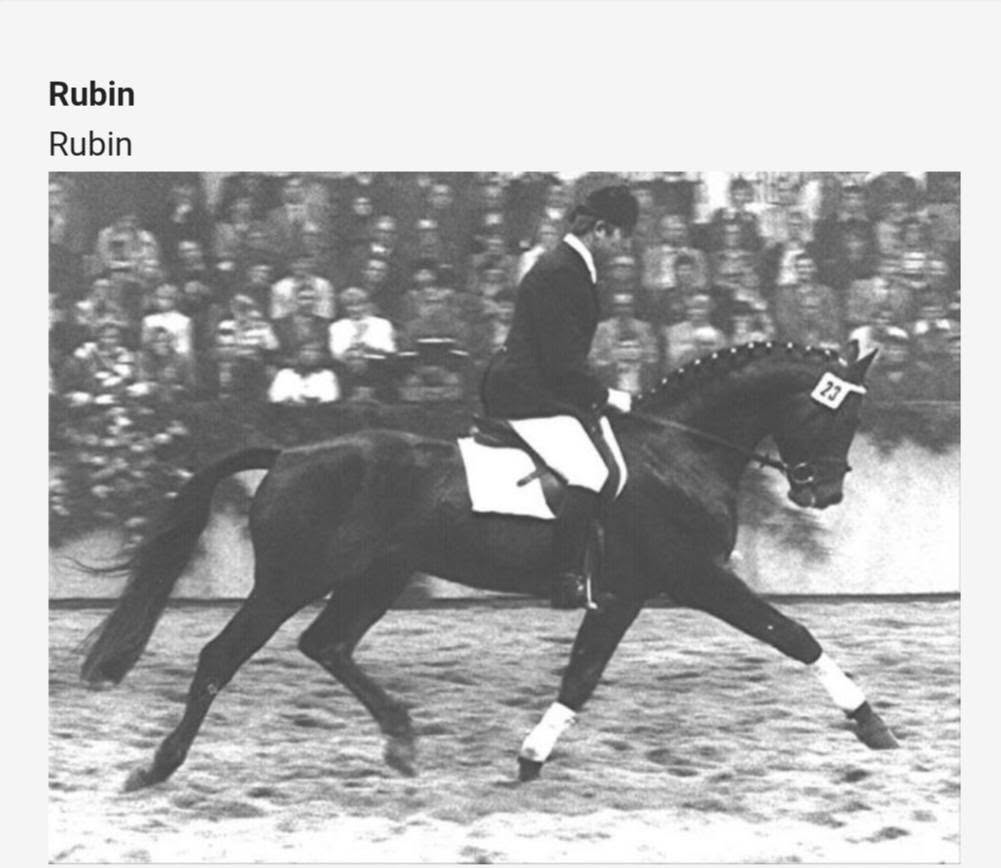
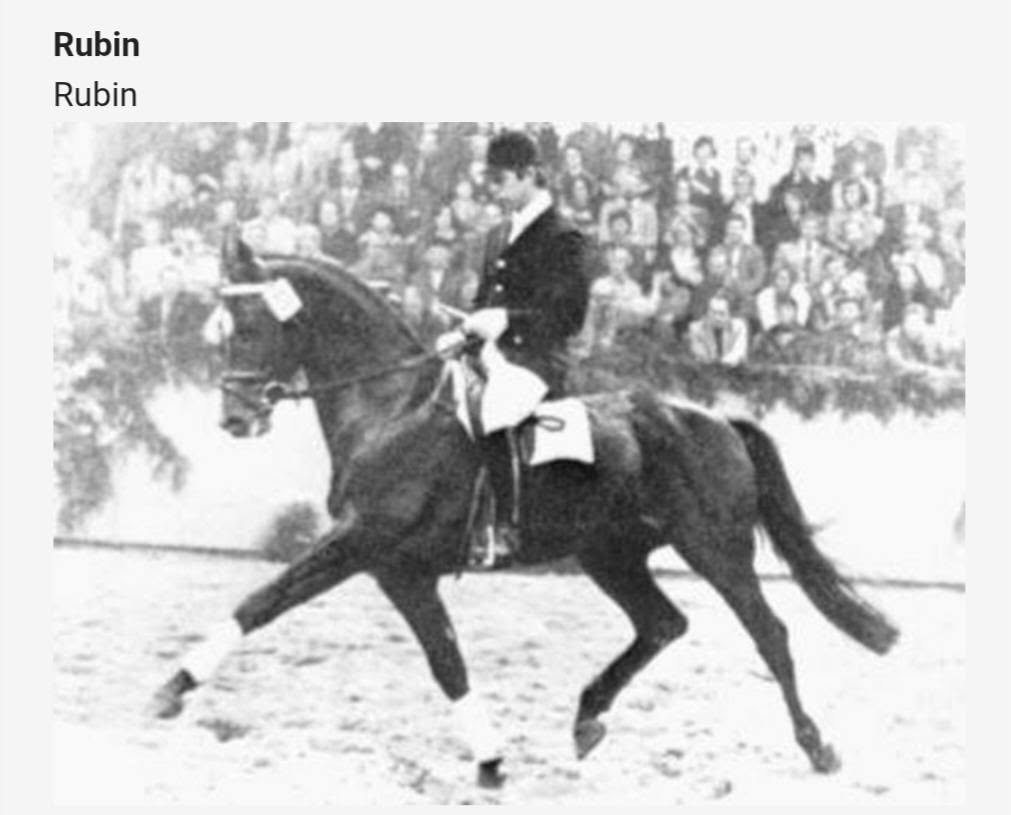
Rubin was foaled in Germany on 27 March 1969. Pedigree records identify him as a brown Trakehner stallion, standing approximately 164 centimetres—just over 16 hands—and bred by Gottfried Hoogen.
He was by the Trakehner stallion Flaneur and out of Reglinde. Through Flaneur, Rubin belonged to a post-war Trakehner branch associated with blood, refinement, movement and rideability.
Rubin was not a towering modern dressage horse. His importance in our story is not measured in height, fashion or publicity. It is measured by the fact that his blood remained intact through a maternal family and is still visible in Noah's official pedigree today.
03 · What Rubin Contributed
Rubin's surviving records do not justify turning him into an Olympic champion or a mass-producing super-sire. That is not the claim this page makes.
His value lies in the Trakehner qualities carried into Noah's maternal line: athletic refinement, balance, sensitivity, movement and rideability. Those are breed influences rather than medals attributed to Rubin himself, and the distinction matters.
Warmblood breeding is not built only by the most famous name in each generation. It is built when complementary qualities are selected, retained and joined to the next branch of a pedigree.
“Rubin's story is not about borrowed fame. It is about blood that survived long enough to become part of our own horses.”
04 · The Documented Route
The official AES pedigree for Noah records the complete maternal route. There is no missing generation and no guesswork:
Rubin sired Ramira. Ramira produced Rawissa. Rawissa produced Raphaela. Raphaela produced Noah.
05 · Raphaela's Maternal Foundation
Noah's sire line brings formidable international jumping blood through Parco, Darco and Lugano van la Roche.
His maternal side adds another dimension. Raphael and Ragazzo bring recognised dressage breeding, while the line through Rawissa, Ramira and Rubin carries the Trakehner contribution beneath it.
That blend matters. Noah was never bred from jumping names alone. His pedigree combines power and courage with movement, balance, intelligence and the ability to be trained—qualities essential to a modern sport horse in any discipline.
Parco, Darco and Lugano van la Roche bring international jumping performance and proven Belgian sport-horse strength.
Ragazzo, Raphael and the Trakehner Rubin branch contribute the dressage and rideability side of Noah's heritage.
06 · Two Photographs, One Surviving Record
Only a small visual record of Rubin appears to have survived. These photographs therefore belong on the page exactly as they are: not polished into something modern, but preserved as part of the historical evidence behind the pedigree.
07 · Rubin in the Living Generations
Once Rubin's blood reached Noah, it passed into the horses bred by Warmblood Horse Sales. Each carries the Trakehner branch alongside Noah's great jumping and dressage ancestors.
08 · A Family Naming Thread
Following Rubin's branch reveals a striking sequence of names in Noah's maternal family:
Ramona, a daughter of Romadour II, was the dam of Rubin's daughter Ramira. That makes her part of the same direct maternal route into Noah. The repeated R, Ra and Ram sound continues through Rubin, Ramona, Ramira, Rawissa and Raphaela.
Brian Mills carried that sound into the names of three of Noah's sons. Each modern name also honours a particular part of the breeding programme: Rameros combines Ramiro and Eros; Ramedoc preserves Medoc's name; and Ramesses II continues the Ra/Ram sound through an Egyptian royal name with a biblical connection.
The names were created for their own meanings, but tracing Rubin's full family shows how naturally they belong beside the historic names already preserved in Noah's pedigree.
09 · Why Rubin Belongs Here
The obvious legends are easy to find. Their victories were photographed, their names repeated and their offspring counted. Rubin represents another part of responsible breeding history.
He shows why a breeder must follow the female family as carefully as the famous sires. His name sits four generations behind Noah, yet without Ramira, Rawissa and Raphaela preserving that branch, his contribution would never have reached the horses being bred today.
Every generation contributes something to the next. Rubin's place is not exaggerated; it is documented.
“Another important horse discovered within the documented pedigrees of our youngsters.”
10 · Continue the Bloodline Story
Rubin's identity, parentage, breeder and recorded height are compiled from established sport-horse pedigree records. The complete Rubin–Ramira–Rawissa–Raphaela–Noah connection, together with Ramona as Ramira's dam, is confirmed by Noah's official Anglo European Studbook record. No competition achievements have been attributed to Rubin without supporting evidence.