
Warmblood Horse Sales · Hall of Fame
Flügel van la Roche
Flügel van la Roche
The Working Stallion Behind Our Mare Line
Some horses are remembered through photographs. Flügel van la Roche is remembered through pedigree, breeder testimony, bone, honesty, work ethic and the ability to serve on the farm during the week before competing at local shows at the weekend.
01 · Why Flügel Is Here
Not a Random Historical Name — A Direct Part of Our Mare Family
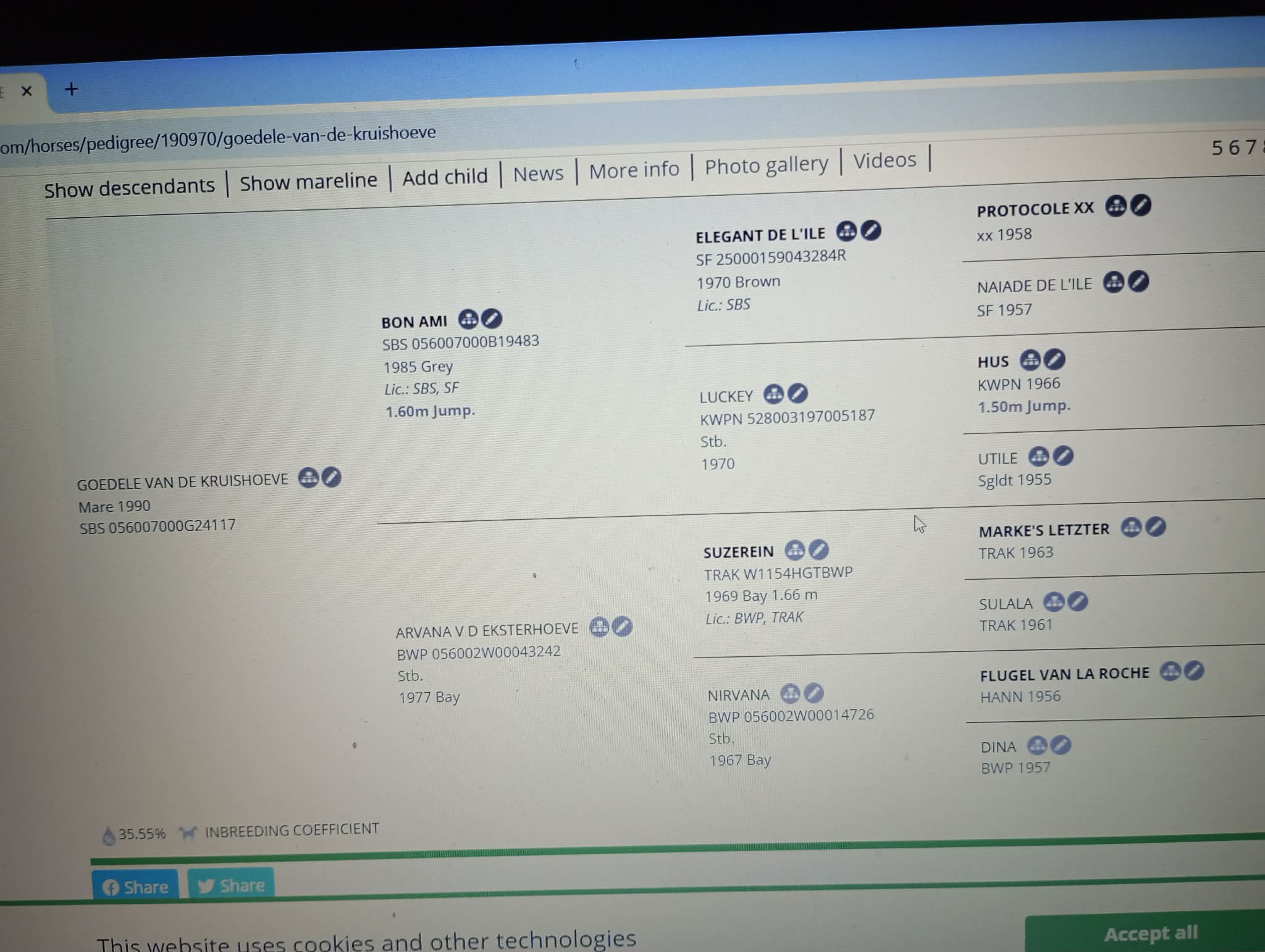
Flügel van la Roche belongs in this Hall of Fame because his blood was deliberately selected by the breeders behind Goedele van de Kruishoeve — and from Goedele that influence travels directly into the Warmblood Horse Sales breeding programme.
His name does not appear here merely because he was old, rare or interesting. He appears because experienced Belgian breeders valued what he represented: strong bone, dependability, attitude and work ethic.
Those qualities mattered enough that the Nijs family selected Goedele as a breeding mare specifically for the combination of Bon Ami and Flügel van la Roche.
Through Goedele, that decision still has living consequences today.
02 · The Horse
A 1956 Hanoverian Chosen for Belgium
Flügel van la Roche was a chestnut Hanoverian stallion foaled in 1956, standing approximately 1.68 metres. Pedigree databases identify him as a son of Firnis out of the mare Ferno, whose sire was Fermor III.
He was approved for the Belgian Warmblood studbook, placing him among the imported Hanoverian stallions used during the formative decades of modern Belgian Warmblood breeding.
His pedigree reaches back through mares recorded in the Hanoverian studbook long before specialist international sport-horse breeding became the industry it is today.
Flügel's Hanoverian sire, foaled in 1946.
His dam, a 1943 Hanoverian Main Stud Book mare by Fermor III.
His second dam, foaled in 1937 and recorded in the Hanoverian Main Stud Book.
The documented mare line continues back to this 1918 Hanoverian mare.
03 · Before the Modern BWP
The Practical Horse Behind the Sport Horse
Flügel came from a period when the boundary between working horse and competition horse was far less rigid than it is today.
According to the Nijs family history, he worked in the fields during the week and competed at local shows at the weekend. That memory places him in the final generation of horses expected to be useful before they were expected to be fashionable.
A horse living that life needed more than jumping talent. He needed strength, soundness, willingness and the temperament to change jobs without changing character.
Those practical qualities help explain why early Belgian breeders valued blood like his. The modern BWP was not built only from glamour. It was built from horses expected to work, endure and remain dependable.
Expected to perform ordinary work before appearing at weekend shows.
Remembered by breeders as a source of substance and physical durability.
Praised for remaining dependable and never disappointing in behaviour.
A practical horse whose usefulness did not prevent him succeeding in local competition.
04 · A Family Memory Preserved
What Wilfried Nijsen's Father Remembered
“My father was a great admirer of Flügel's blood. He knew the stallion working in the fields during the week and going to local shows at the weekend. He never disappointed in attitude or results.”
Family history shared by Belgian breeder Wilfried Nijsen, preserving the memories passed down by his father.
This account is valuable because it records something no database can: what the horse was like to the people who knew his working life.
Competition tables may record placings. Pedigree charts may preserve names. But memories preserve character.
Flügel's place in this Hall of Fame therefore rests on two kinds of evidence: the documented pedigree and the breeder's memory of a horse admired for his everyday honesty.
05 · Why Goedele Was Chosen
Bon Ami for Blood — Flügel for Bone and Work Ethic
Wilfried explained that his family bought Goedele van de Kruishoeve as a breeding mare because of the combination of Bon Ami and Flügel van la Roche.
At that time, Bon Ami was valued for adding blood and toughness. Flügel was valued for work ethic, strong bone, attitude and practical reliability.
This was deliberate breeding rather than accidental ancestry: one influence bringing blood and athletic sharpness, the other supplying substance, dependability and character.
Goedele therefore represented a balance chosen by people who knew what each side of the pedigree was expected to contribute.
06 · The Line Into Our Horses
From a Working Stallion to the Horses Standing With Us Today
Flügel's influence reaches Warmblood Horse Sales through the mare line selected by the Nijs family.
It travels through Goedele van de Kruishoeve into Davina van het Gonnehof, and from Davina into the daughters bred here.
That makes Flügel more than a distant historical curiosity. He is part of the carefully selected foundation behind living horses in this programme.
07 · A Quiet Influence in Modern Pedigrees
A Name That Continued Through Belgian Mare Families
Modern pedigree records continue to show Flügel van la Roche in Belgian mare families, including combinations with other influential foundation stallions such as Lugano van la Roche.
Official BWP material still identifies the recognised combination of Lugano van la Roche with daughters carrying Flügel van la Roche, and notes international performers emerging from those families.
His influence was therefore not confined to one mare or one generation. It remained embedded in Belgian breeding families long after the practical working world in which he lived had disappeared.
08 · Beyond Fashion
The Kind of Horse Breeding Must Not Forget
Modern sport often measures horses by height jumped, medals won and prices achieved. Flügel represents an older and equally important measure.
Could the horse work? Could he remain sound? Could he be trusted? Could he perform when asked and return to ordinary life without losing his mind or attitude?
The answer remembered by the people around Flügel was yes.
That practical honesty is not separate from athletic ability. It is the foundation beneath it.
09 · His Legacy
The Farm Horse Who Helped Build a Sport-Horse Family
“Before horses were bred only to become specialists, some first had to prove they could be useful.”
Flügel van la Roche worked.
He competed.
He bred.
He earned the respect of the people who knew him.
Then his influence travelled quietly through Belgian mares and into a new century.
That is why his story belongs here.
Pedigree details on this page are drawn from published Hanoverian and Belgian Warmblood pedigree records. The account of Flügel's working life and character is family history shared directly by Belgian breeder Wilfried Nijsen.
10 · Historical Acknowledgement
With Sincere Thanks to Mr Wilfried Nijsen
Warmblood Horse Sales would like to express sincere thanks to Mr Wilfried Nijsen of Belgium for generously sharing personal family memories, pedigree material and historical context relating to Flügel van la Roche, Goedele van de Kruishoeve and the breeding decisions made by his family.
The recollections passed down from his father preserve something no database can: the character of the horses, the reasons certain bloodlines were trusted and the practical qualities breeders valued before modern sport-horse breeding became the international industry it is today.
Through Mr Nijsen's contribution, the memory of Flügel van la Roche is no longer reduced to a name inside a pedigree. It becomes the story of a stallion remembered for working in the fields during the week, competing at local shows at the weekend and never disappointing in attitude or results.
These memories are included with gratitude so future breeders can understand not only which horses appear in the pedigree, but why those horses mattered to the people who knew them.
“History is not preserved by names alone. It survives through the memories of the breeders who lived it.”
Historical contribution and family recollections courtesy of Mr Wilfried Nijsen, Belgium.